Norck Expands Advanced 3D Printing Services for Prototyping and Production
Norck combines flexible manufacturing with engineering, material guidance, and quality control to accelerate functional

Press Release Disclaimer: This is a press release distributed through the XPR Media network. It has not been independently verified by our newsroom.
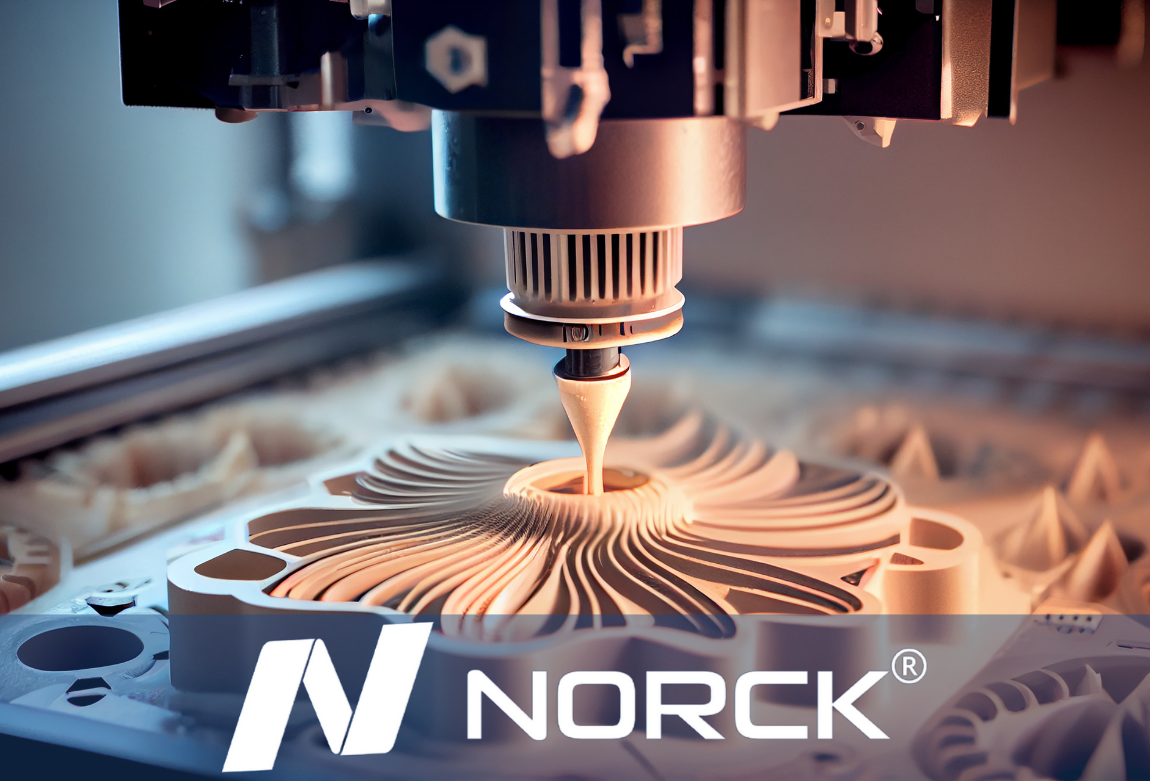

IRVINE,CALIFORNIA, CA, UNITED STATES, July 24, 2026 /EINPresswire.com/ — Norck strengthens its polymer and metal additive manufacturing capabilities to support faster product development, complex component production, engineering validation, and scalable manufacturing.
Norck, a precision manufacturing and engineering company serving customers through a global manufacturing network, has expanded its advanced 3D printing services for prototype, low-volume, and production applications.
The expanded capabilities give engineering teams access to multiple polymer and metal additive manufacturing technologies through a coordinated manufacturing platform. Norck supports customers with 3D printing design assistance, material selection, engineering validation, post-processing, and the transition from prototypes to repeat production.
These services are intended for companies seeking to reduce product development time, evaluate new designs, manufacture complex geometries, and produce functional components without the tooling requirements associated with many conventional manufacturing processes.
Expanding Polymer and Metal Additive Manufacturing
Recent 3D printing advancements have extended additive manufacturing beyond visual models and early-stage design concepts. Modern systems can now produce functional prototypes, manufacturing aids, customized components, low-volume production parts, and complex metal components.
Norck’s additive manufacturing services include:
– Fused Deposition Modeling
– Stereolithography
– Selective Laser Sintering
– HP Multi Jet Fusion
– PolyJet 3D printing
– Carbon Digital Light Synthesis
– Direct Metal Laser Sintering
– Additive manufacturing post-processing
– Vapor smoothing for compatible polymer components
By offering multiple processes, Norck can recommend a manufacturing method based on component geometry, material requirements, surface finish, mechanical performance, dimensional accuracy, production quantity, and end-use conditions.
This process-neutral approach allows customers to select the technology that fits the application instead of adapting the application to a single 3D printing system.
Engineering Support and 3D Printing Design Assistance
Successful additive manufacturing begins with more than converting a CAD file into a printed component. Part orientation, wall thickness, support structures, minimum feature sizes, internal channels, thermal behavior, and material properties can all affect the final result.
Norck provides engineering support and Design for Manufacturability assistance for additive manufacturing projects. Its engineers review customer designs to identify potential printing challenges and determine whether geometry should be adjusted for a specific polymer or metal process.
The design review may include evaluating:
– Wall and feature thickness
– Build orientation
– Support requirements
– Internal channels and cavities
– Dimensional tolerances
– Surface finish expectations
– Mechanical loads
– Thermal performance
– Post-processing requirements
– Production scalability
Norck also supports customers during material selection, functional testing, design validation, and manufacturing optimization. This approach helps engineering teams reduce unnecessary design iterations and achieve a faster time-to-market.
Plastic 3D Printing for Functional Prototypes and Production Parts
Norck’s plastic 3D printing capabilities include FDM, SLA, SLS, MJF, PolyJet, and Carbon DLS technologies. Each process provides different advantages depending on the application.
FDM 3D printing services can be used for concept models, fixtures, jigs, housings, and functional thermoplastic components. The process supports a range of materials and is suitable for projects requiring a practical balance between cost, speed, and mechanical performance.
Stereolithography 3D printing produces detailed resin components with smooth surfaces and fine features. It can support visual prototypes, form-and-fit evaluation, medical models, master patterns, and other applications requiring a high level of detail.
Norck’s selective laser sintering services and MJF 3D printing service support durable nylon components with complex geometries. These processes can produce functional prototypes and low-volume parts without the need for conventional support structures.
PolyJet can be used for detailed prototypes, multi-material models, and components requiring controlled textures or material characteristics. Carbon DLS 3D printing provides another option for functional polymer components with application-specific performance requirements.
These additive manufacturing services allow customers to produce individual prototypes, customized components, short-run products, and replacement parts while evaluating whether the project should remain in additive production or transition to injection molding.
Metal 3D Printing for Complex Components
Norck provides metal additive manufacturing through direct metal laser sintering and related technologies. For organizations searching for a reliable 3D printing metal service, Norck offers engineering review, production coordination, post-processing, and quality inspection within an integrated workflow.
Metal 3D printing can be suitable for components with complex internal channels, lightweight structures, topology-optimized geometries, consolidated assemblies, and shapes that may be difficult to produce through conventional machining alone.
Norck’s aluminum 3D printing service supports lightweight components for aerospace, robotics, automotive, electronics, and industrial applications. Other available metal options can be evaluated according to the component’s strength, corrosion resistance, temperature exposure, and operating environment.
Customers can also access metal 3D printing online by submitting CAD models and technical requirements for quotation and engineering review. Norck evaluates the design, material, expected production quantity, dimensional requirements, and post-processing needs before recommending a production approach.
Where required, printed metal components can be combined with CNC machining to achieve critical tolerances, threaded features, sealing surfaces, or controlled surface finishes.
Applications Across Advanced Industries
Norck’s 3D printing services support aerospace, medical devices, robotics, industrial automation, defense, automotive, electronics, semiconductor technology, energy, packaging, research and development, and consumer products.
Typical applications include:
– Lightweight aerospace components
– Custom medical parts and anatomical models
– Robotic grippers and end-effector components
– Automation fixtures, jigs, and tooling
– Cooling channels and thermal-management components
– Semiconductor equipment components
– Electronic housings and enclosures
– Automotive prototypes and test components
– Research equipment and laboratory fixtures
– Customized consumer products
Rapid additive manufacturing enables engineering teams to test multiple design versions, evaluate assemblies, and identify potential problems before investing in production tooling.
“Additive manufacturing gives customers more freedom to test, validate, and improve their designs,” said Mucahit Basaran, CEO of Norck. “Norck combines that flexibility with engineering support, material guidance, quality control, and scalable manufacturing. The objective is to help customers select the correct process, produce functional components faster, and establish a clear path from prototype to production.”
Advancing Digital and On-Demand Manufacturing
Norck plans to continue investing in 3D printer innovation, manufacturing capacity, materials, post-processing capabilities, and digital quotation processes. The company will also continue integrating additive manufacturing with CNC machining, injection molding, sheet metal fabrication, and assembly services.
This end-to-end manufacturing model allows customers to begin with 3D-printed prototypes, validate the design, and transition to the most appropriate production method as quantities and performance requirements develop.
About Norck
Norck provides precision manufacturing and engineering services for customers in the United States, Europe, and international markets. Its capabilities include metal and plastic 3D printing, CNC machining, sheet metal fabrication, injection molding, custom component manufacturing, rapid prototyping, and assembly.
Norck combines engineering support, 3D printing design assistance, on-demand production, ISO quality standards, precision manufacturing, and a global manufacturing network to support product development, low-volume production, and high-volume manufacturing.
Rabia KOCA
Norck
email us here
Visit us on social media:
LinkedIn
Facebook
Legal Disclaimer:
EIN Presswire provides this news content “as is” without warranty of any kind. We do not accept any responsibility or liability
for the accuracy, content, images, videos, licenses, completeness, legality, or reliability of the information contained in this
article. If you have any complaints or copyright issues related to this article, kindly contact the author above.

Media gallery